The Village That Never Forgot Me
On returning to a childhood that didn’t wait
There is a particular kind of leaving that is never quite finished.
Not the leaving of airports and farewells and luggage tags. Not the leaving of choice or ambition or circumstance. I mean the leaving that happens to children — the kind where one morning you are a boy climbing umbrella pine trees in the mountains of Northern Metn, Lebanon, and then decades pass, and then you are standing at the same gate, in front of the same house, and a woman who knew you before you knew yourself is yelling at you — affectionately, unmistakably, in the exact same voice she used when you misbehaved — for not coming back sooner.
Fifty years is apparently not a sufficient excuse.
The World We Lived In
I grew up in the Northern Metn, in a Lebanon that no longer exists in the form I knew it. This requires some explanation for those who did not live it, because the life of a child in a Lebanese mountain village in the 1960s and early 1970s was something so fundamentally different from contemporary childhood that it requires almost an anthropological framing to convey accurately.
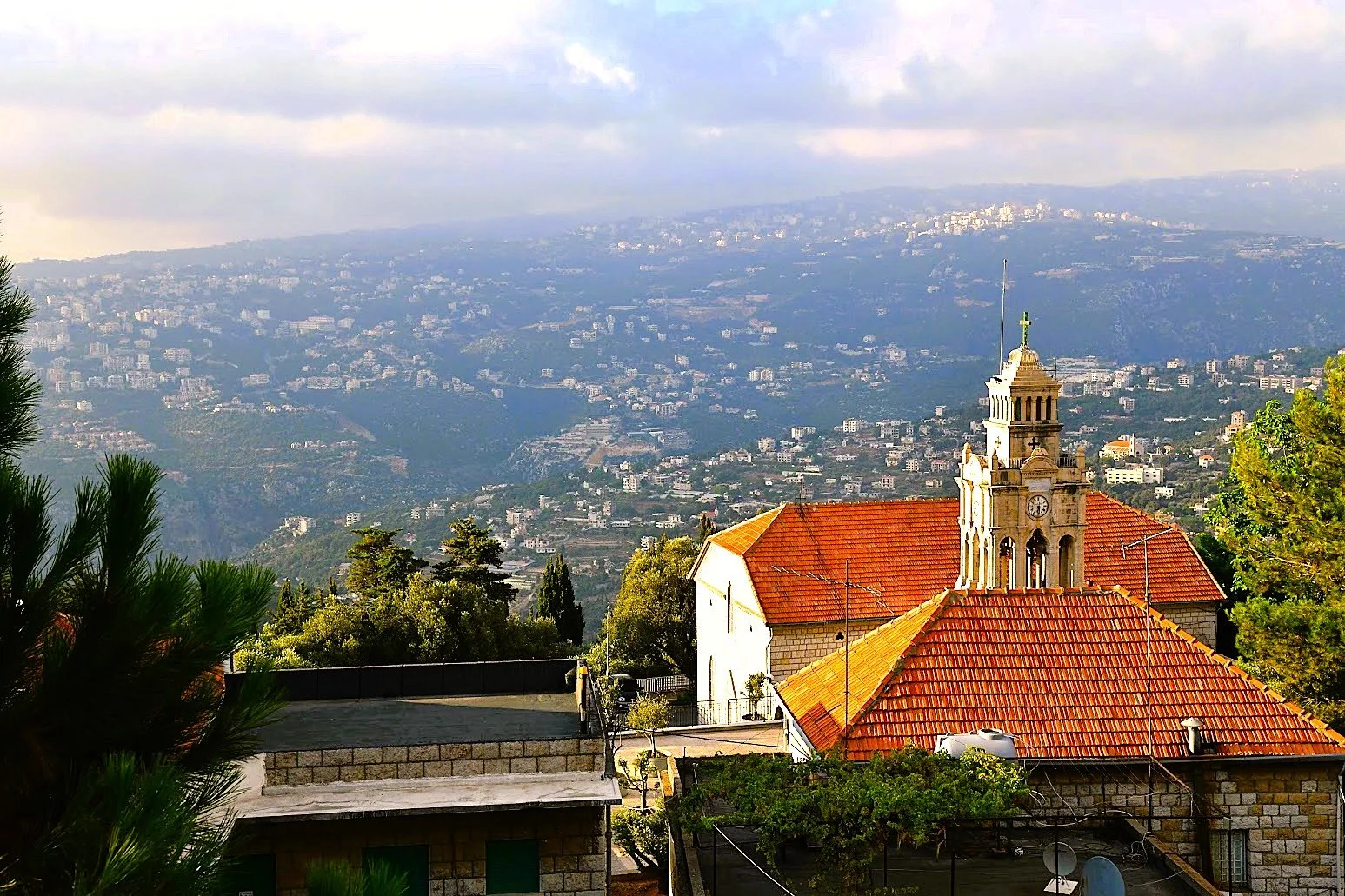
We left in the morning. We came home at sunset. That was the entire structure of the day.
In between those two fixed points — the morning departure and the evening return — was a world of complete and unsupervised freedom that today would make modern parents reach for their phones in panic. We climbed. We foraged. We jumped fences to eat figs and grapes and clementines from gardens that were not technically ours but were understood by everyone, including the garden owners, to be collectively available to children in transit. We built tree houses in the umbrella pines — Pinus pinea, those magnificent flat-canopied stone pines that look like nature’s own architecture — and we stayed in them until the light changed and some internal clock we didn’t know we had told us it was time to come down.
We knew which plants to eat. I cannot fully explain how we knew this. It was transmitted the way genuine knowledge always travels in tight communities — through older children teaching younger children, through grandmothers whose hands moved through gardens with a certainty that needed no explanation, through ten thousand years of a people living in intimate relationship with a specific landscape. Sage apples. Wild crabapples. Blueberries growing on the mountain as if the mountain had planted them for us specifically. We ate from the land the way the land intended — directly, gratefully, without intermediary.
If your mother needed you, she told the neighbor. The neighbor told the next person. The next person told whoever was walking on the street. Within minutes — and I mean minutes, not hours — the message arrived wherever you were: your mother is looking for you. Five kilometers of mountain village operating as a single social nervous system, more reliable than any technology invented since.
You ran home.
The Architecture of a Village Childhood
What made this world function was a social contract so deeply embedded it required no articulation. Every mother was every child’s mother. Every house was every child’s house. Whichever house you were nearest when the afternoon nap descended upon the village — and it always descended, the whole mountain going quiet in the heat — that was your house for two hours. The mother of that house would call every child within range, direct you all to the garden hose, wash you efficiently and without ceremony, and put you down to sleep.
You woke to a marmalade and butter sandwich and strong tea.
If you have never had this specific combination — bitter orange marmalade, cold butter, white bread, tea brewed strong enough to leave a ring in the cup — after a two-hour nap in someone else’s house on a hot afternoon in the Lebanese mountains, then you have not yet encountered one of the great sensory experiences available to a human being. That sandwich meant the day was not over. That sandwich meant there was still light, still time, still the whole golden latter half of the afternoon stretching ahead before sunset called everyone home.
We ate together at whoever’s house we happened to be near at mealtimes. This was not charity or imposition. It was simply how the village operated. The concept of a child being turned away from a table because they did not belong to that particular family was as foreign to us as the concept of a bird being turned away from a tree because it was born in a different forest.
We were the village’s children. All of us. Collectively. Without paperwork.
The Khamaseen Came and We Were Already Outside
The Northern Metn is one of the wettest parts of Lebanon. The mountains catch the Mediterranean weather systems and wring them out — thunder that rolls through the valleys like something alive, rain on pine needles that sounds like applause, winter storms that make the cedars groan. We loved the storms. We played in them.
But what we loved most were the Khamaseen days.
Khamseen — fifty. The hot desert winds that arrive after Easter and blow for roughly fifty days across the Levant, carrying fine Saharan particulate that turns the sky a color that has no precise name in English but that every child of the eastern Mediterranean recognizes instantly. Amber. Warm. Slightly unreal. The shadows disappear. The light goes flat and golden simultaneously. The sea, looks like hammered copper.
No rain. No sweater. Every child in the village was already outside before the adults finished their morning coffee.
I did not know then that I was learning to see. I thought I was just playing.
Decades later, standing in a Chicago forest preserve at dawn with a Nikon D850 and a 500mm lens, watching the light come through the trees and feeling the instinct to stop and wait for the right moment — I understand now that the boy in the umbrella pine tree was the same person. The Khamaseen taught me that light is not static. That the sky is always becoming something. That patience is not waiting — it is watching.
Fifty Years. Three Visits. One Neighbor.
We left Lebanon roughly fifty years ago. We moved, and kept moving. Twelve countries. A career built across continents. A life that, measured in air miles, would circle the earth many times over.
I went back three times.
The first return came after thirty-nine years of absence. Thirty-nine years is long enough for children to become grandparents. Long enough for the umbrella pines to grow another generation of canopy. Long enough for a village to forget most things.
My neighbor had not forgotten.
She did not recognize me at first. How could she? The boy she knew had become a man of fifty-something, carrying the weight and the weathering of a life lived across a dozen countries. I was standing at her gate, this woman who had hosed me down and fed me sandwiches and yelled at me for tracking mud and loved me with the casual totality that village mothers extended to all children within range — and she did not know my face.
Then I told her my name.
What happened next is difficult to describe to someone who did not grow up in this particular culture, in this particular landscape, with this particular understanding of what it means to belong to a place and a people.
It was as if the thirty-nine years simply did not count.
The arms came around me before I finished saying who I was. The kisses — both cheeks, then again, then again, the way Lebanese greetings work when the emotion behind them is real. The yelling — and yes, there was yelling, affectionate and immediate and completely recognizable as the same voice that called me home across five kilometers of mountain when I was seven years old — for not coming back sooner. For staying away so long. For making her worry.
She had been worrying, apparently, for thirty-nine years.
She insisted I come in for lunch. Not suggested. Insisted. The way only Mediterranean women of a certain generation can insist — with a finality that makes refusal not just impolite but cosmically incorrect, as if declining would violate some fundamental law of hospitality that predates written language.
She tried very hard to make me stay the night.
I sat at her table and ate food prepared by hands that had fed me as a child, in a house I had run past a thousand times, on a mountain where I had learned everything important before I knew I was learning anything. And I understood — in the way you only understand things when you are old enough to know what you almost lost — that this is what home actually means.
Not a place. Not a house. Not even a country.
A woman who yells at you for leaving and feeds you anyway.
What the Village Taught Me That the World Confirmed
I have worked in forty countries and visited over a hundred. I have managed luxury hotels on multiple continents. I have navigated boardrooms and crises and the particular brutality of organizational politics at the highest levels. I have met heads of state and celebrities and billionaires and I have found, without exception, that the most important things I know — about people, about trust, about what actually matters — I learned before I was twelve years old in the Northern Metn.
I learned that community is not an abstraction. It is a garden hose and a nap and a sandwich.
I learned that communication is not technology. It is one neighbor telling another neighbor and the message arriving anyway.
I learned that belonging is not about paperwork or borders or the particular lines that powerful men drew through living civilizations for their own convenience. It is about a woman who didn’t recognize your face but knew your name and loved you across thirty-nine years of silence without being asked.
I learned that food is not sustenance. It is memory made edible. The marmalade and butter sandwich is not a sandwich. It is a whole childhood compressed into a single taste — every afternoon nap, every garden hose, every sunset return, every mother who was also your mother because the village had decided that’s how it worked.
I am American by citizenship, Lebanese by mountain childhood. A citizen of the world by profession and by the particular homelessness that diaspora permanently installs in a person. I carry the Northern Metn in my body the way the Khamaseen carries the Sahara — invisibly, as a quality of light, detectable only to those who know what they’re looking for.
For Layla
I have a granddaughter. She is thirteen months old. She waves away food she doesn’t want and points imperiously to the next option, which tells me the Ibrahim discernment regarding cuisine arrived fully formed and non-negotiable in the next generation.
I am teaching her to walk.
I have photographed her since birth — crawling, pulling herself up against the couch, walking the wall with her hands, falling down with the magnificent indifference of someone who has not yet learned to be afraid of falling. I am making a video of the whole arc set to Sia’s Unstoppable, which I will finish when she takes her first independent steps.
I wrote her a book. Fifty-three life lessons in a limited hardcover edition she cannot read yet.
I want her to know about the umbrella pine trees. About the garden hose and the marmalade sandwich. About the neighbor who yelled at her Jeddo for leaving and then fed him lunch and tried to make him stay the night. About the Khamaseen winds that turned the mountain sky amber and sent every child in the village outside before the adults finished their coffee.
I want her to understand that she comes from people who knew how to build a world out of almost nothing — out of rocky mountain soil and fig trees and the simple agreement that children belong to everyone and everyone is responsible for children.
I want her to know that home is not an address.
It is a woman at a gate who knows your name even when she doesn’t recognize your face.
It is a sandwich that tastes like every afternoon you were ever given back to yourself after a nap.
It is a mountain that kept your memory while you were busy becoming someone else.
Fifty years. Three visits. One neighbor who never stopped worrying.
The village that never forgot me.
I never forgot it either.